
Bedding by look
Hotel style bedding
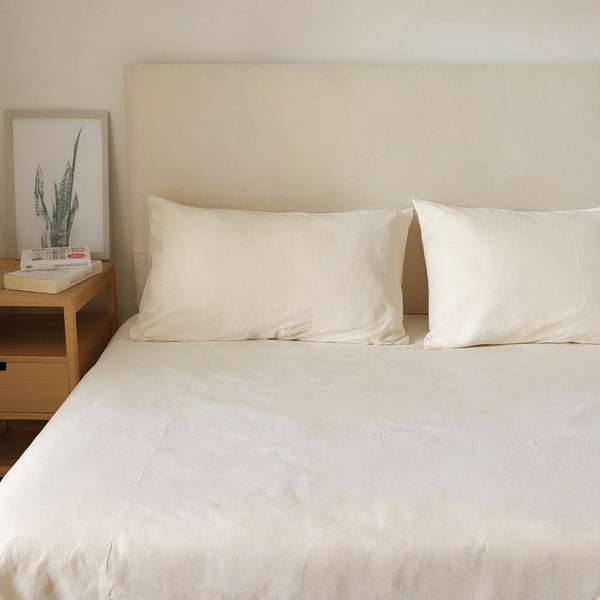
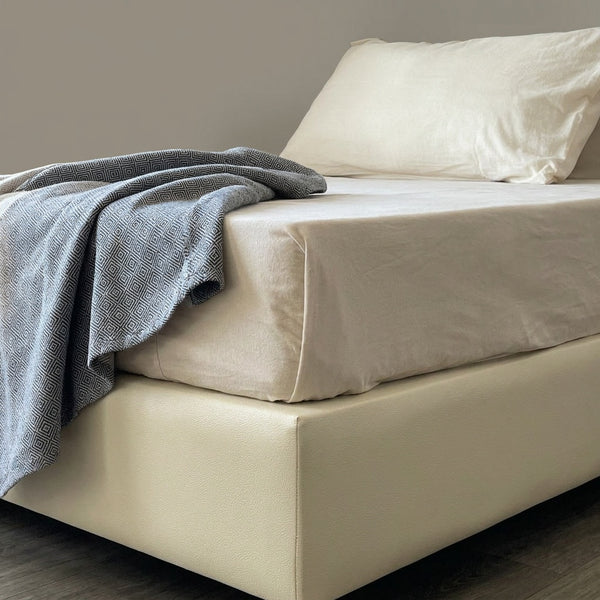
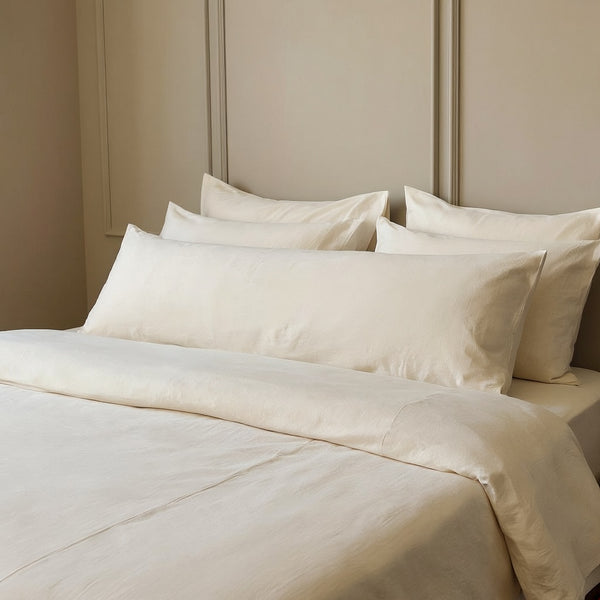
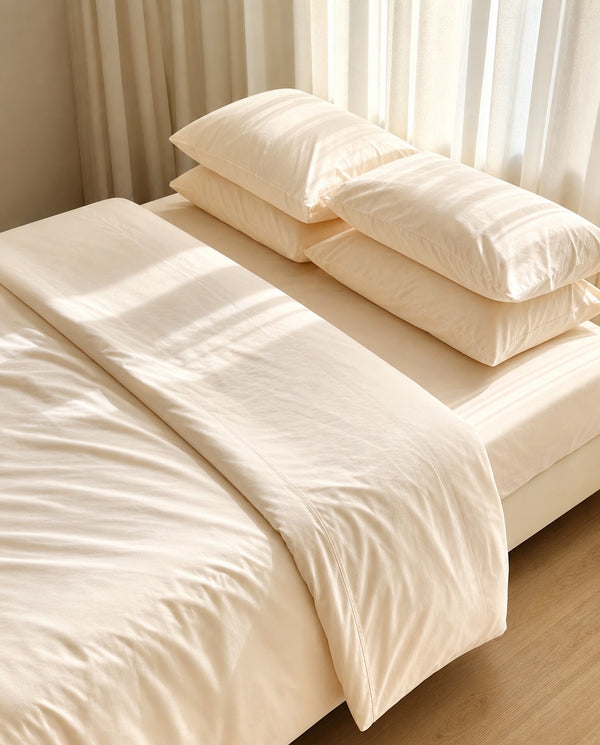
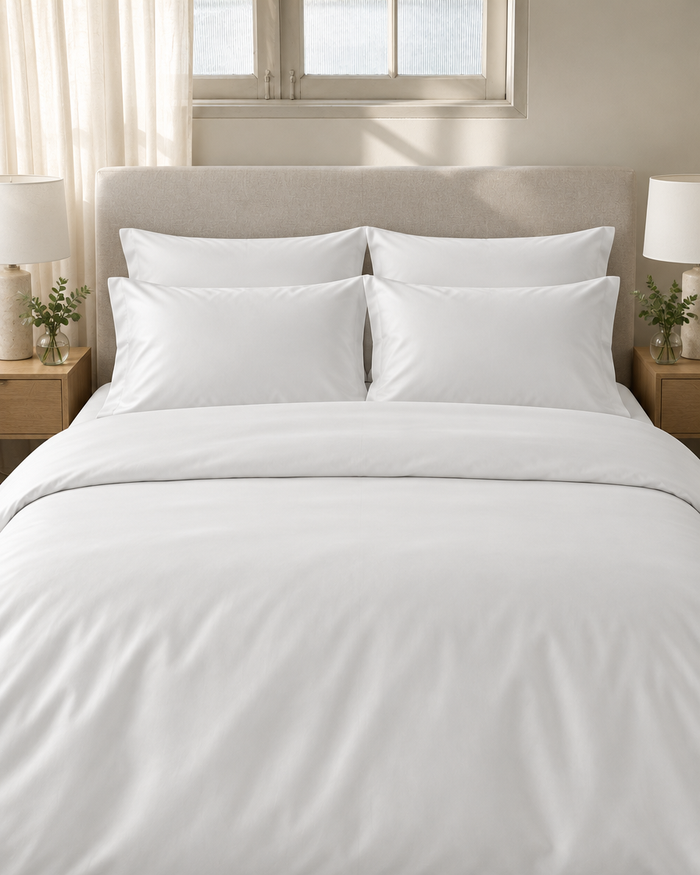
The hotel bed is a look you can copy: white cotton, a tightly fitted sheet, four pillows and a duvet folded back in a deep turn-down. We make it in two whites: Silky Cotton sateen, smooth with a low lustre, and Plain Cotton percale, crisp and matt.
Milky White Silky Cotton sateen, double set £104.90. Or Off White percale from £59.90.
White bedding for a hotel bed
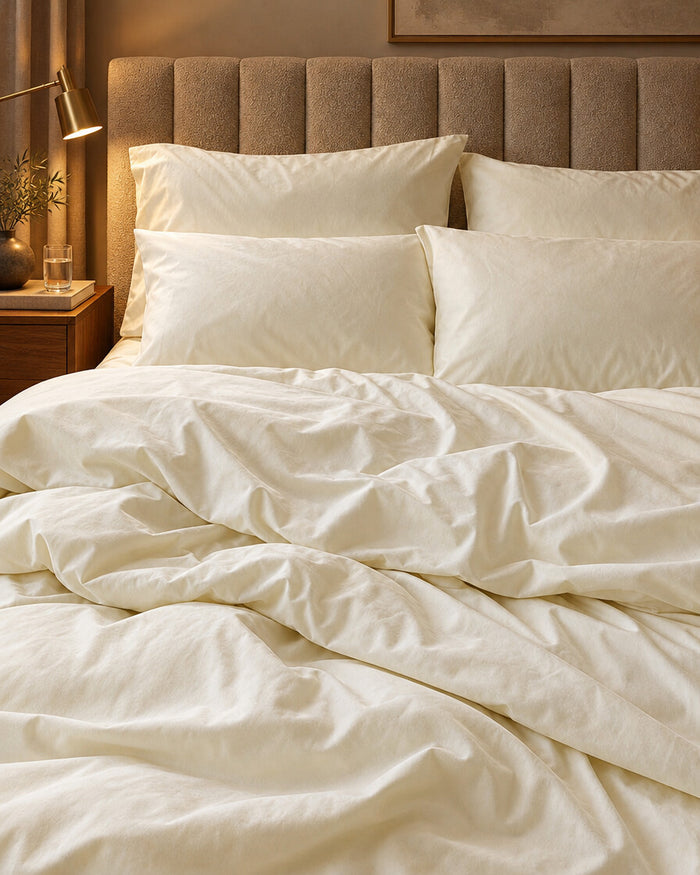
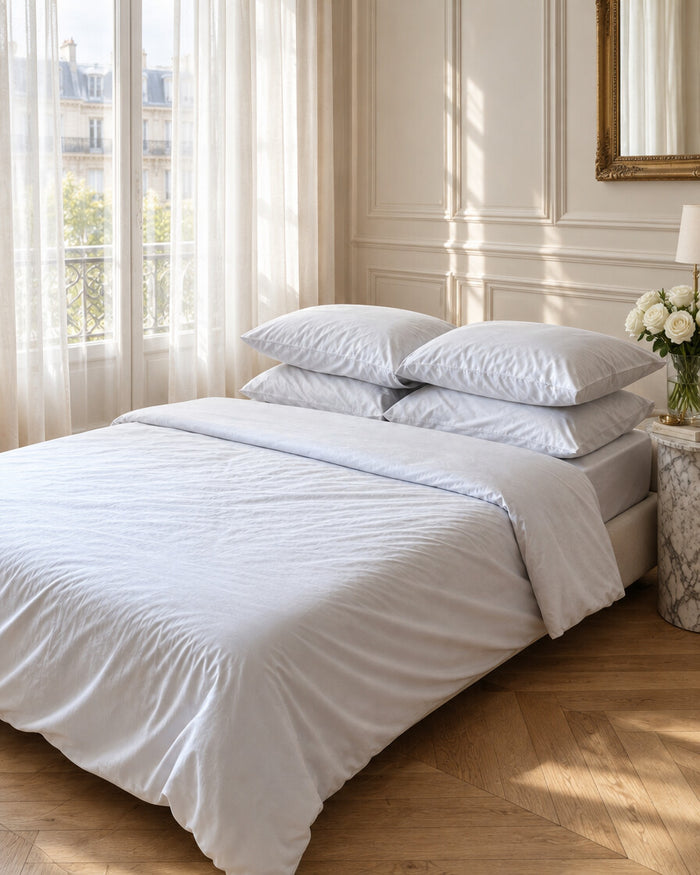
Each photograph is the variant itself. Prices start at the single size; pillowcases are priced each.
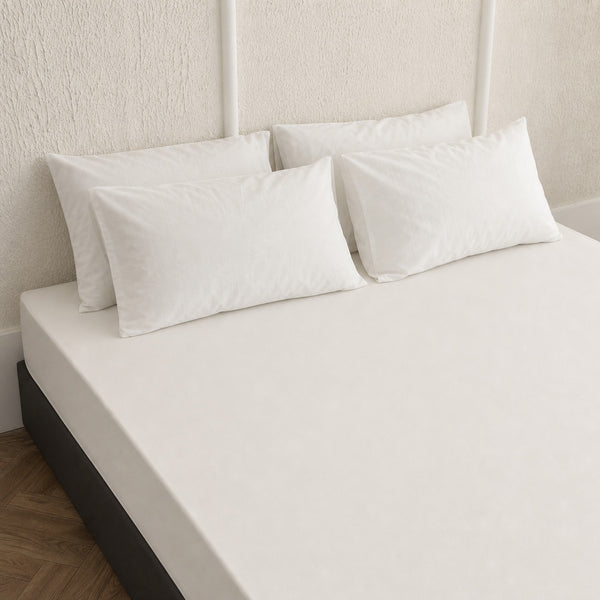
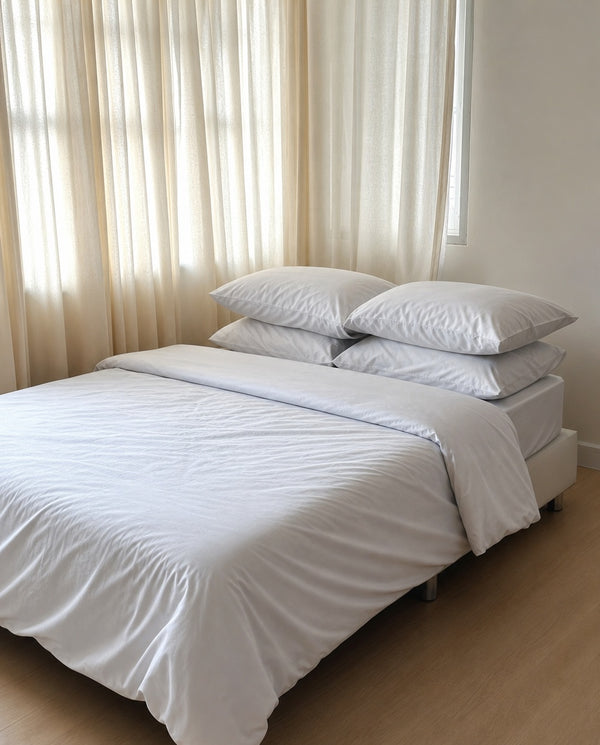
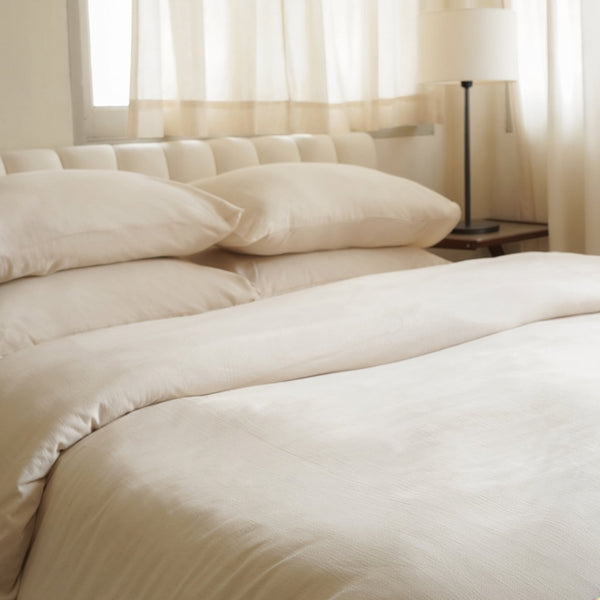
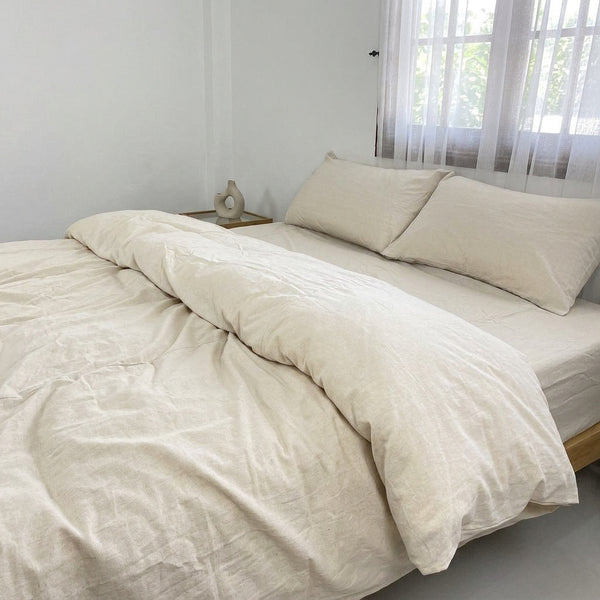
Crisp, white and squared off
The look comes from how the bed is made as much as from the cloth.
What bedding do 5-star hotels use?
Short answer. Five-star hotels use plain white 100% cotton sheeting, usually percale or sateen somewhere between 250 and 400 thread count, chosen for how it survives industrial laundering rather than for how it feels in the shop. The crispness you remember is the laundry process, not the cloth.
Plain white 100% cotton, in percale or sateen, typically between 250 and 400 thread count, bought in enormous volume to survive hundreds of industrial wash cycles. White is chosen so everything can be bleached and processed together, and the specification is driven by durability under commercial laundering far more than by luxury of hand. At the very top end, properties buy from European hotel-linen mills such as Frette or Rivolta Carmignani.
Note what is absent: no exotic fibre, no four-figure thread count, no clever blend. Just good, plain, hard-wearing cotton.
What type of bedding does Marriott use?
Marriott uses cotton-rich sheeting specified centrally and varying by brand tier, and it sells its own hotel bedding direct to the public through Marriott Bonvoy Boutiques — which is the most reliable way to find out what a given property actually sleeps on. Its luxury brands sit at a higher specification than its select-service ones, so there is no single Marriott sheet.
The same is true of every large group. The brand on the door tells you the tier, not the thread count.

Why are hotel bedsheets so good?
Because of the laundry, not the linen. Commercial laundering washes at high temperature with strong detergents, then finishes sheets through a heated roller press — a calender — which flattens and polishes the fibre surface in a way no domestic iron matches. That pressing is what creates the cool, crisp, slightly glazed hand you remember. Fresh sheets on every arrival do the rest.
You cannot fully replicate a calender at home. You can get most of the way there with percale rather than sateen, a cool wash and a low tumble, and ironing the top edge of the flat sheet and the pillowcases while very slightly damp. That last detail is most of the effect.
Why do hotels use flat sheets instead of fitted?
Three practical reasons: a flat sheet fits any mattress depth, so one stock item covers a whole building; flat sheets feed through industrial pressing machinery while fitted sheets with elastic cannot; and a flat sheet between guest and duvet means the duvet itself does not need washing every day. It is a laundry decision, not a comfort one.
The technique built on it is triple sheeting: flat sheet, duvet or blanket, second flat sheet on top, all tucked. It looks immaculate, it launders completely, and it is the reason a hotel bed feels tight when you get into it.
Do hotels wash bedding between guests?
Sheets and pillowcases, yes — every property of any standard changes and launders those between every guest. Duvets, mattress protectors and decorative bed runners are a different matter: those are washed on a rotation rather than daily, which is precisely why the triple-sheeting method exists, since it keeps a laundered layer between the guest and anything that is not.
Which is a fair argument for the flat sheet at home too, if your duvet cover does not get washed as often as your bottom sheet does.
Why does Gen Z not use top sheets?
Because they grew up with the duvet-and-cover system, which is standard across most of Europe and makes the top sheet redundant. A duvet cover is itself a washable layer, so the flat sheet is doing a job that is already being done — and it is one less thing to launder, iron and wrestle back onto the bed. It is a practical shift rather than a generational failing.
The counter-argument is real though: a duvet cover is bulky, slow to dry and therefore washed less often than a flat sheet would be. If your cover goes in the machine weekly, skip the top sheet happily. If it does not, the top sheet is earning its place.
How long is too long without washing sheets?
Every one to two weeks is the usual recommendation for sheets and pillowcases, and beyond about three weeks is where most people would agree it has gone too long. Sheets accumulate body oils, sweat and skin cells nightly; the interval that matters most is for the pillowcase, which is in contact with your face and hair and benefits from a more frequent change than the rest of the bed.
The realistic fix is not discipline, it is a second set. Two sets in rotation turns stripping the bed into a two-minute job rather than a laundry commitment.
Why does one side of the bed go yellow?
Body oils and perspiration soak into the fabric, and the residues oxidise over time into a yellow stain that ordinary cool washing does not remove. It shows on one side because that is where one person sleeps, and it shows more with cooler wash temperatures, heavier night-time perspiration and oil-based skincare or hair products transferring onto the cloth.
What actually helps: wash sheets weekly at the temperature on the care label, do not overload the drum, use a mattress protector you can launder, and dry fully — residual damp sets the discolouration. Once oxidised it is difficult to reverse, so this is a prevention problem rather than a stain-removal one. Our bedding care guide has the full routine by fabric.
How to make a bed hotel style
1. Tight sheet. Pull the fitted sheet so the corners sit square and the top is flat. Ours fit mattresses up to 35 cm deep, which covers most beds with a topper.
2. Add a flat sheet. The single most hotel-like change, and the cheapest: a Plain Cotton flat sheet between you and the duvet.
3. Four pillows. Two sleeping pillows flat, two stacked against the headboard. Use matching pillowcases; spare Silky Cotton pillowcases start at £12.90 each.
4. Deep turn-down. Fold the top of the duvet back by about a third, so the reverse and the sheet show.
5. Iron the edges. Iron the turn-back and the pillowcases while slightly damp. It is most of the crisp hotel effect.
6. One colour, two sets. White throughout, and a second set so the bed is always freshly made.
Whites to build in
Each opens the builder with a double bed in that white and fabric.
White with one accent
A hotel bed with a single colour at the head.
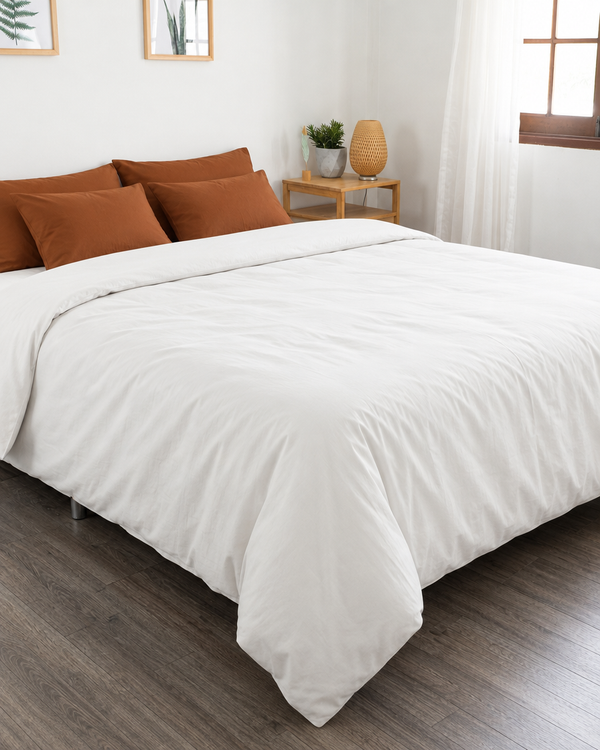
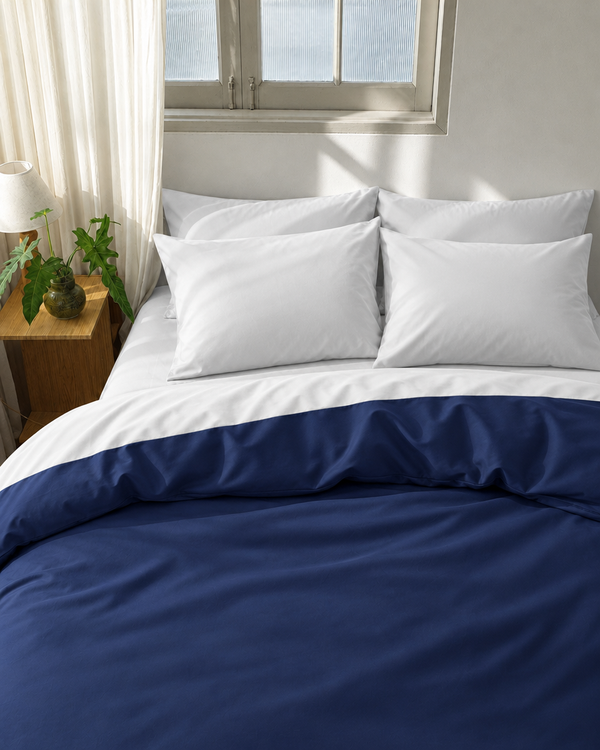
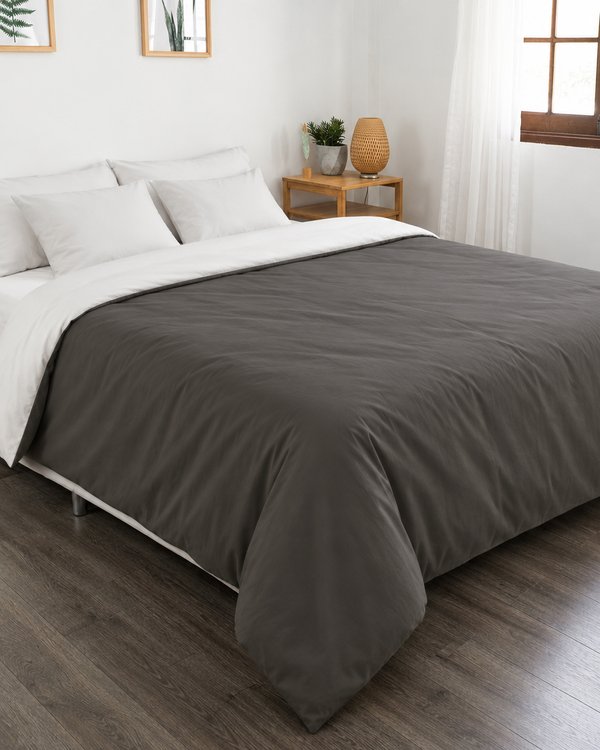
The bed pictures here are styled previews of each pairing in our fabrics; the product photographs above show every piece in the colour you get. More pairings in how to mix bedding colours.
Questions about hotel style bedding
Sateen or percale for a hotel bed?
Sateen gives the smooth, slightly lustrous hotel look; percale gives a crisper, matt one. Both are pure cotton.
How much is a white sateen double set?
A Silky Cotton sateen double set of fitted sheet, duvet cover and pillowcases is £104.90 in the colour combo builder. A white Plain Cotton percale double set is £59.90.
How many pillows does a hotel bed have?
Usually four on a double: two to sleep on and two stacked behind them.
How do I get the turn-down look?
Fold the top third of the duvet back towards the foot of the bed so the reverse and the sheet show, and square it off.
More ways to choose
Bedding by need, by look and by room. Each page covers one question; the colour pages below cover one colour each.
Other colours
Every colour in our range has one page. The colour combo builder holds all of them in all four fabrics.
Or shop by bed size: Single, Double, King, Super King.
A white sateen bed, from £104.90
Fitted sheet, duvet cover and pillowcases for a double in Silky Cotton sateen. White percale from £59.90.
Build a white sateen bedCompare the fabrics